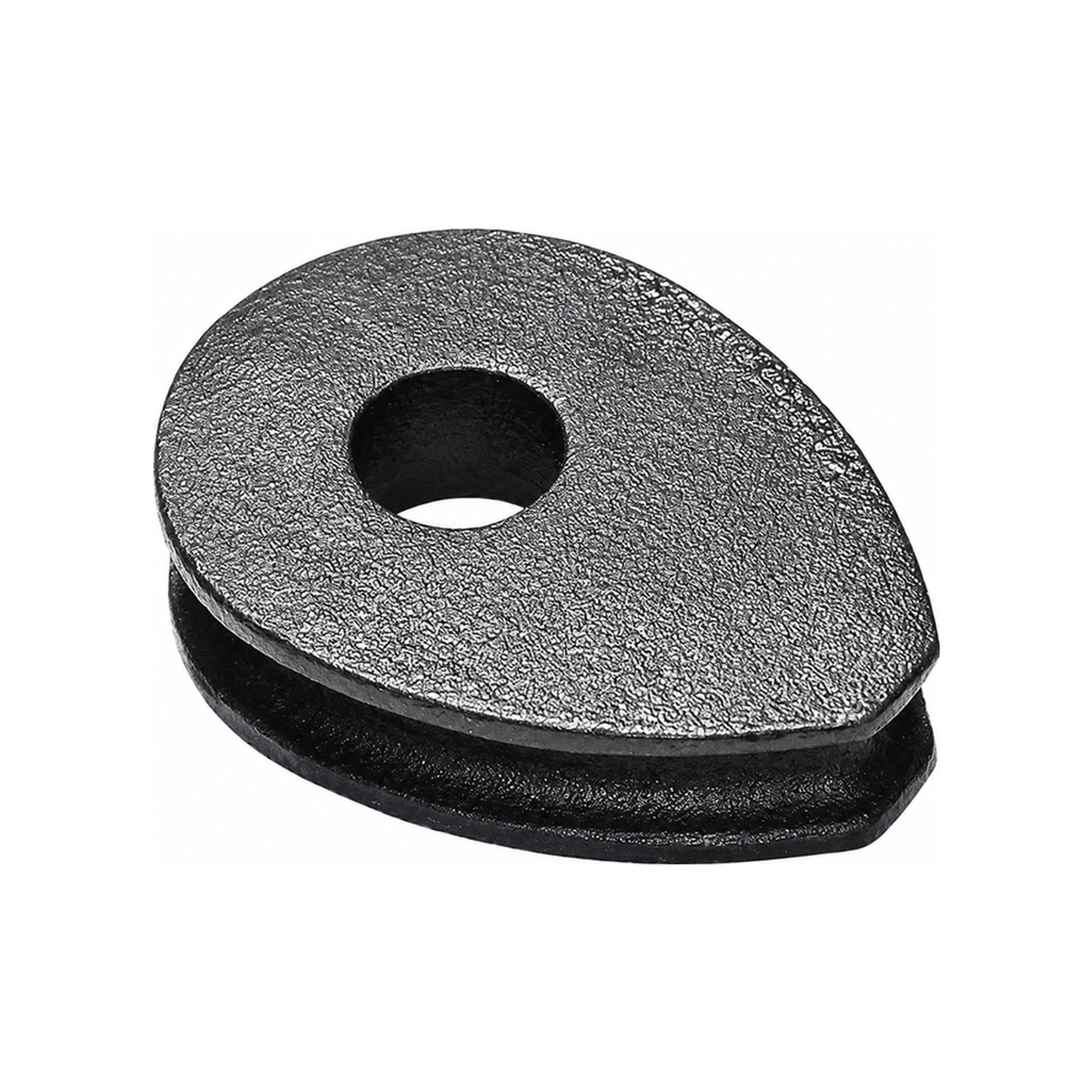
A thimble sits inside the loop of a wire rope sling and gives the eye a defined bearing surface. The pressed eye shape is formed to DIN 65457, while the cross locked types to DIN 3090 and DIN 6899B are wound around the rope without soldering.
Product line
Models in this line
Every model in this line has its own catalogue photo, dimension table and drawing. Select a model to see its full detail below.
Size the thimble to the rope diameter, not to the working load. A thimble is a bearing seat; the rope remains the load bearing member.
Use a pressed thimble for permanent, heavy service and a cross locked one where the assembly has to be opened and re-made on site.
Check the groove geometry matches the rope construction. A thimble groove that does not match the rope will flatten the strands under load.
Applications
Wire rope sling eyesLashing and tie-down assembliesShips and mooring gearCrane hook blocksSports and stage riggingLifting and pulling applications
Safety & use notes
A thimble forms the eye only. It must be connected to a shackle, hook or master link that carries the rated load.
Never weld a cross locked thimble. The wire is softened and would lose its strength.
Inspect the groove for wear and the body for cracks or distortion before every lifting operation.
Model types, related standards and manufacturing
Types & standards
Pressed thimble DIN 65457A solid steel thimble pressed around the rope loop to DIN 65457, giving the eye a smooth bearing surface against the connected fitting.
Cross locked thimble DIN 3090 / DIN 6899BA wire thimble wound around the rope and locked by twisting, with no soldered joint — the wire body conforms to the rope.
Strip or plate is blanked and formed into the grooved profile, or the thimble is produced from a forging for heavier duty.
The groove is finished so the rope seats fully in it without being pinched.
Edges are deburred so nothing cuts the rope.
Surface treatment is applied to suit the exposure.
What to check on receipt
The groove matches the rope diameter — the rope should sit in it, not perch on top of it.
There are no sharp edges or burrs that could cut the rope.
The thimble has not been distorted in transit, and the two ends meet as they should.
FAQ
What is the difference between a pressed and a cross locked thimble?
A pressed thimble is a solid steel section pressed over the rope; a cross locked thimble is drawn wire wound around the rope and locked by twisting. Pressed types suit permanent heavy service, cross locked types suit assemblies that must be opened on site.
Does the thimble carry the load?
No. The wire rope carries the load. The thimble provides a defined, smooth bearing surface so the eye bears on the fitting rather than on the rope strands.
Cookies on newbas.comWe use strictly necessary cookies to run this site. With your consent only, Google Analytics 4 helps us understand how it is used. No tracking, no advertising.